
The solstice has been and gone. That’s what it feels like sometimes, that we await specific moments, enjoy them for a day and then eagerly await the next. If you read Season Songs: Rediscovering the Magic in the Cycles of the Seasons, then you’ll know I see the sabbats as seasons, with the energies of each ebbing and flowing throughout. As such, there is still plenty of time to revel in the magic of Litha, otherwise known as midsummer, and what better way to do it then getting out into the land where you live and finding the magical plant, mugwort.
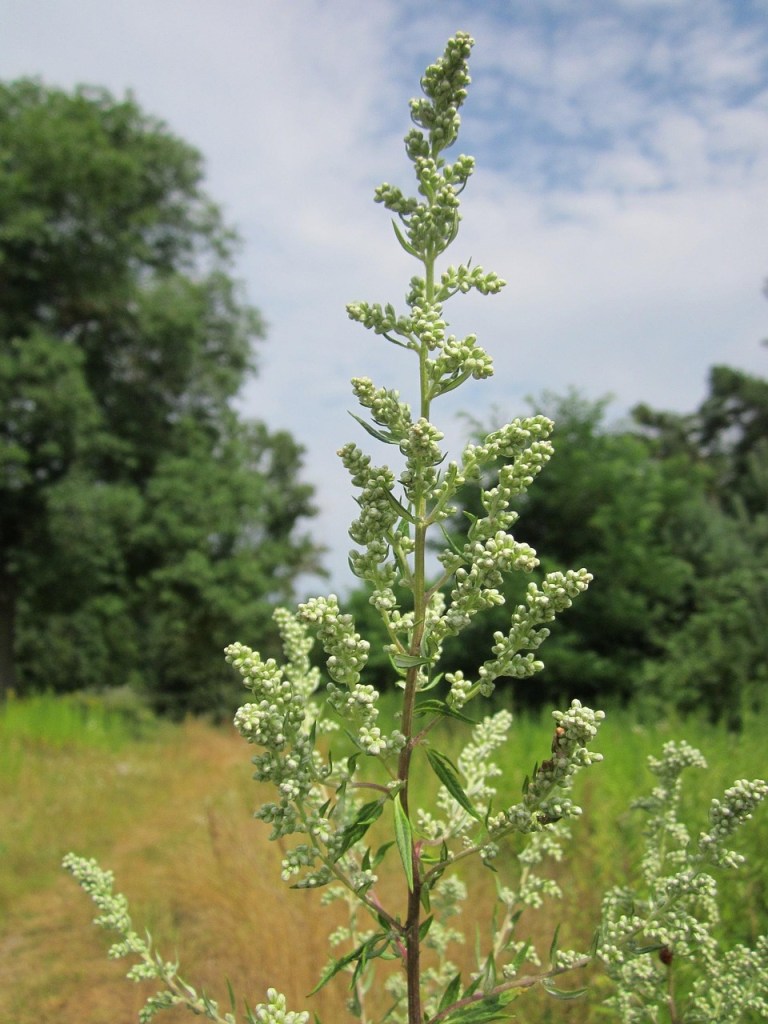
Mugwort (Artemisia Vulgaris) is one of my favourite plants. It grows everywhere in my own area, on waste ground, by the river, along footpaths and hedges, all the lonely, overlooked and forgotten spaces. A member of the daisy family, mugwort is named after the huntress goddess Artemis and its planetary associations link it with Venus.
Perhaps it is most well known for its help in ‘female disorders’ as Culpeper puts it. It can help with painful periods and can help induce periods (which is why it shouldn’t be handled or used by pregnant women or those trying to conceive).
Mugwort however, is an important magical plant in British folklore and witchcraft. It is named in the Old English Anglo Saxon Nine Herbs charm and continues to be used in magical practise. It is associated with St John (himself associated with the summer solstice, his day is 24th June), as such is associated with protection. Interestingly, it is also associated with Papa Legba, the Vodou Lwa who acts as gatekeeper between the realms (he is often linked with St John).
The chemical make up of Mugwort also makes it a mild psychoactive. It contains thujone, which while toxic in large doses, does have a mild psychoactive quality. Mugwort is useful in dream work and can aid in meditation and trance work.
All in all, mugwort is steeped in folklore and magic, perfect for midsummer workings.
Mugwort Tea
To use in dream work and meditation, you can make a delicious tea with the leaves and flowers. I like to add chamomile and lavender as well to make a tea that relaxes the body and calms the mind. To make this tea, simply steep 2 teaspoons of mugwort, 2 of chamomile and one of lavender in boiled water for about 6 minutes. Sweeten with honey if you prefer, and then drink while it’s still hot.
Mugwort Smoke Stick
You can also make a smoke stick for cleansing your space, tapping into those protective qualities of mugwort.
Take a few stems of mugwort, including leaves and flowers. You can also add a few stems of lavender if you want to. Bend them over so you have a thick bundle and using embroidery thread, wind it around the plant to secure the bundle. tie the thread off at the bottom and snip any loose ends. When you are ready to use it, light the end and blow out any flames so that it smoulders. Fan the smoke around the area.
For Energy
If you feel like you need to tap into the energy of Artemis, you can carry a sprig of mugwort on your body. If you are a runner or walker, then place some flowers and leaves in your shoe for an added energy boost.
Mugwort Tincture
I love a magical tincture, they are so useful and can be added to other washes and waters. I always make a mugwort tincture every year. You can take a few drops a day in water or use to cleanse your home, incorporating it into your own cleaning routines. to make the tincture, fill a jar with dried leaves and flowers and cover with a good quality spirit such as rum or vodka. Leave for around a month and then strain into a clean jar.


 Emma Kathryn Wild Witchcraft
Leave a comment