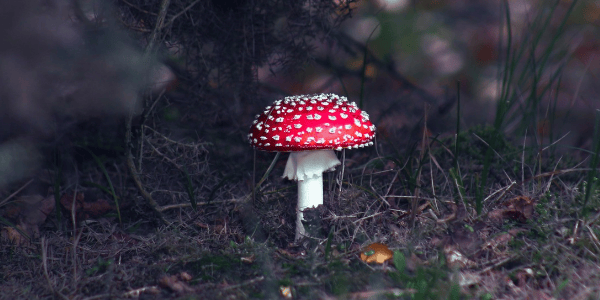
Fog shrouded the early morning, making the world beyond my own small bubble feel like a mystery. I didn’t mind, an atmospheric, misty wander through the woods sounded like my idea of a good time. Alas, as we drove, the fog began to lighten, giving way to hazy sunshine. Not too bad, swapping the foggy walk for one in which the golden sunlight caught the yellows and oranges of the trees in their autumn finery, setting them ablaze in stunning display of colour.
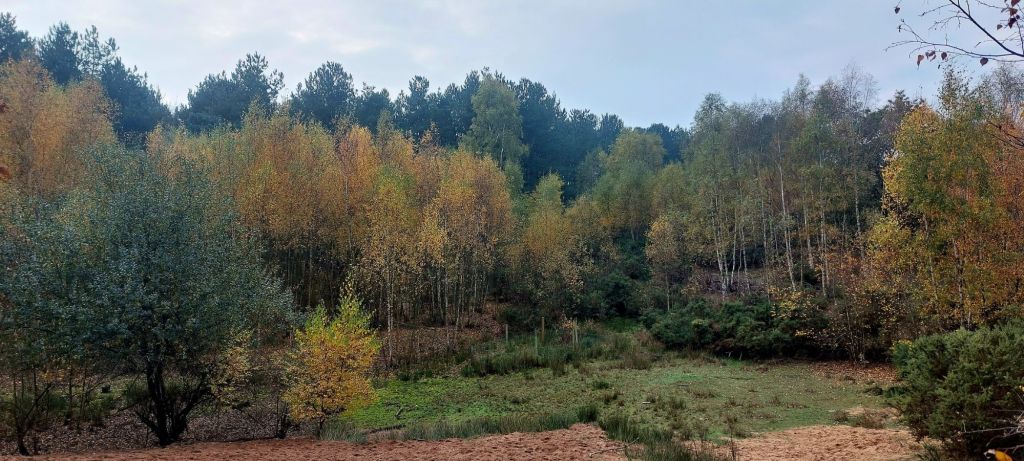
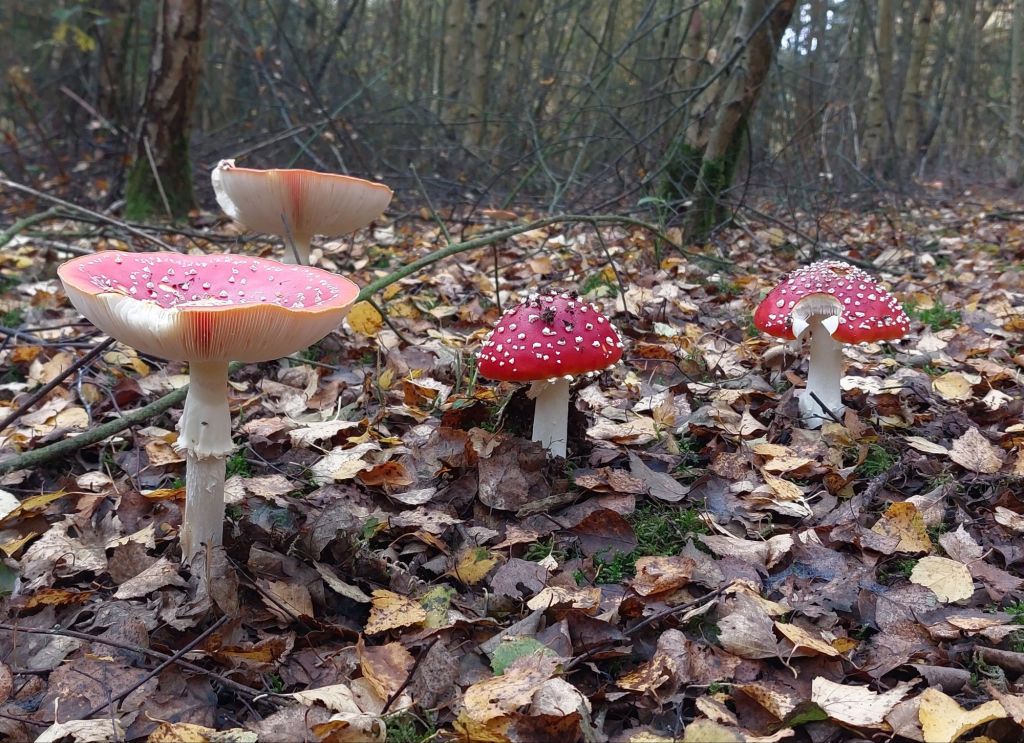
The woods we were visiting were not totally local to me, not my usual haunt, but a twenty minute drive away. This particular place is special, a rare sandy heath woodland, one of the rarest in the country, boasting an array of wildlife. But I was going for something in particular, a vibrant display of fly agaric. So armed with my camera, off I went into the woods. I wasn’t disappointed.
There’s something about the red, white spotted toadstool that captures the imagination. It is steeped in folklore, least of all because of its toxic qualities. There are plenty of people, who, chasing the next high, seek out the shiny red caps of the fly agaric, but there are easier highs if that’s your bag. For me though, the lore and connection of this fungi are what is so special, of how it has captured the imagination of people, oozing magic and otherworldly delight.
The fly agaric is associated with Christmas, least of all because the colours remind us of Santa’s present delivering outfit. It is also associated with reindeer, who like to make a meal of the poisonous fungi. The Sami people discovered that drinking the urine of reindeer who had consumed fly agaric allowed for the psychoactive qualities to be enjoyed without the toxicity. There is some suggestion that this link with getting high, the feeling of flying and reindeer is one reason why Santa’s sleigh is pulled by flying reindeer. Since around the 14th century, fly agaric has been associated with magic, fairies and other magical creatures, commonly appearing in art and literature.
I often find the real magic of fungi, including the beloved fly agaric, is the mycelial network, the wood wide web, as this idea of connectivity is often referred to. Fungi help shape the world around them, with the mycorrhizal network working with other plants and trees around them, an exchange of water and nutrients flowing between fungi and tree, hence why you find particular fungi in specific woodland types. The fly agaric likes to team up with birch trees and spruces, so is often found in woodlands with a mix of those species.
For me though, I’m happy to connect to the land, and catch a few snaps of these beautifully alluring toadstools on my camera!
Recommended reading
Sheldrake, M. (2020). Entangled life: How fungi make our worlds, change our minds and shape our futures. Random House / The Bodley Head.
https://publicdomainreview.org/essay/fungi-folklore-and-fairyland


Leave a Reply