
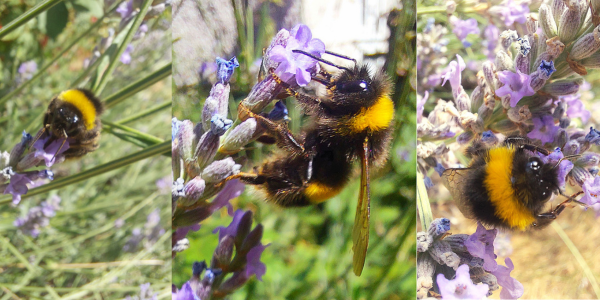
It’s been a while since I last wrote, and just like that, we are in the midst of summer. One of my favourite things in the garden right now, is my lavender bush in the back garden. Believe me when I tell you it is resplendent to behold! There are so many spikes of those pale purple flowers, and as always, they are a magnet for the bees. I could sit transfixed for hours as the breeze carries the scent of lavender and the drone of the bees, watching as the spikes dip and sway with all the commotion! So, what better time than now to delve into a little bit of bee lore.
Telling the Bees
Bees are important little creatures. They, along with other pollinators, keep the plants growing and the food coming, in that continuous cycle of growth, reproduction, death and rebirth. Honey is and has been an important foodstuff for humans too, so it is easy to see why so much lore has sprung up around these fascinating fuzzy flyers. Telling the bees, is perhaps one of the most well known aspects of bee folklore. If you own beehives, then it is necessary to keep the bees informed of any changes to the household, particularly deaths. As well as being good manners, failure to do so might lead the bees to abandon their hives and find pastures new, or die. Perhaps this relates back to bees being such an important part of humanity’s survival.
Death
Delving a little deeper into the death side of bee folklore, there are steps that should be taken if it is the beekeeper themselves that have died. Not only should the bees be allowed to mourn, but the hives should be draped with black cloth (or at least partly, nobody wants to anger the bees, he), but they should also be offered some of the funerary foods. As a witch and animist, I find this idea extremely satisfying. As an animal lover, the connection between human and non-human is one that can be so profound that it is difficult to explain, but is one that most of us who share our lives with animals will understand.
In English folklore, if a swarm of bees lands on a dead tree, or a deadened branch of a living tree, then it is a sign that death is on the way for the person who witnesses such an event, or a death within their family.
Divinity
There’s more to the humble little bee than meets the eye, and in many cultures around the world, the bee has been linked to gods and goddesses.
The ancient Egyptians believed bees sprang forth from the tears of Ra as they landed on the desert floor. In Hindu mythology, bees helped the goddess of bees, Bhramari, defeat the demon Arunasura by stinging him all over, allowing the gods to regain control. In Greek mythology, Apollo gained the gift of prophecy from three bee goddesses. In Christianity, the bee if not considered sacred itself, is held in high esteem, due to the fact that church candles are traditionally made with beeswax.
Symbolism and Correspondences
As well as the lore, there are many magickal associations and correspondences surrounding bees.
Bees are well known for their hard work and dedication and team efforts. If a bee crosses your path, then it is a sure sign all your hard work and effort towards a goal will soon pay off, or at least a reminder to keep on going!
Bees are also seen as omens of good luck and fortune. This perhaps comes from the fact that honey is sweet and delicious, a sign of abundance and luxury. It’s particularly lucky if a bee should land on your head. It’s also considered to be a sign of luck if a bee should fly into your home, but beware, for if it dies in your house, then bad luck will surely follow.
Honey
I couldn’t write about bee lore without adding a word or two about honey.
In folklore around the world, honey is often seen as a divine foodstuff, the food of the gods, if you will. Honey is associated with magic, perhaps owing to its medicinal properties and that it can be used to preserve other food items. It was used in ritual embalming of the dead, not only because of the preservative qualities mentioned above, but also because it provided food and sustenance for the journey into the afterlife.
As we have seen, honey was often considered the food of the gods, and as such, honey was believed to inspire creativity. Keeping with the food theme for a moment more, in Celtic and Norse folklore, honey connected mortals to the land of the gods. Mead was not only a means of getting drunk, but was also a sacred drink, used in ritual. In Norse mythology, the Mead of Poetry gave divine inspiration to any who drank it.
So there we have it, a bit of folklore inspired by my very mundane morning hanging the washing out to dry in the warm sun, blown by a lavender scented breeze, with the drone of the bees a symphony of the summer.



Leave a comment